
Taylor Swift: An Illustrative Case of Opposing a Trademark Application
Last week, Taylor Swift filed an opposition proceeding with the United States Patent & Trademark Office (“USPTO”) against trademark applicant Cathay Home, Inc. (“Cathay”) for the trademark of the stylized spelling of SWIFT HOME, as shown here:

The intent-to-use application states that the mark is intended to be used with a line of home goods, such as decorative pillows, bedding and linens.
The singer cited several of her own trademark registrations that include such homewares as potentially confusingly similar to the applied-for mark, such as:
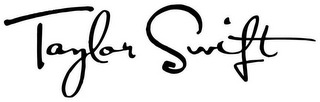
You’ve likely read plenty of news stories about this case, but what is really going on here? Let’s take a closer look.
What are Opposition Proceedings at the USPTO?
An opposition proceeding is a USPTO administrative trial where a third party challenges a pending trademark application’s eligibility for registration, typically alleging it causes likelihood of confusion or dilution with an existing mark, as was the case for Ms. Swift. Such proceedings are one tool that trademark owners such as Ms. Swift can invoke to protect their brand from potential infringers before the infringing mark is granted registration with the USPTO. Oppositions are conducted entirely before the USPTO’s Trademark Trial and Appeals Board (TTAB) and are usually cheaper and faster than federal court litigation. One drawback is that TTAB cannot award monetary damages or issue injunctions to prevent someone from using their trademark without USPTO registration of the mark. By contrast, federal courts handle actions brought over trademark infringement and actual marketplace conduct of the parties and can award monetary damages and injunctions to prevent further use of an infringing mark.
Opposition proceedings arise after the publication of the trademark application, which, as we have seen in previous posts, is the final stage of the application examination process at the USPTO.
What Did Taylor Swift’s Legal Team Do?
Ms. Swift’s legal team filed the necessary paperwork with the USPTO during the publication period for the SWIFT HOME application, giving rise to the formal opposition that was filed last week.
The trademark application for SWIFT HOME underwent the full examination process at the USPTO and was in the final step before the mark went on to register. The whole point of the publication phase of trademark applications is to do exactly what happened in the Swift case: the public is put on notice of potential trademarks that were eligible for registration via publication of the marks in the USPTO’s Official Gazette.
Once the SWIFT HOME mark was published, Ms. Swift’s legal team immediately filed the necessary extensions of time to preserve her right to file an opposition to the mark. This opposition proceeding was formally filed on February 11, 2026, seeking to block registration of the SWIFT HOME mark based on the fact that Swift’s team felt that the mark was confusingly similar to Ms. Swift’s stylized TAYLOR SWIFT mark shown above. Both marks were to be used with a line of homewares, per USPTO records, meaning that Swift’s team felt that consumers may confuse the SWIFT HOME mark for Ms. Swift’s brand.
What Happens Now?
In a typical opposition proceeding, the applicant for the trademark would answer the notice of opposition and the case would proceed much as federal litigation matters proceed, with discovery conferences and the discovery process getting underway once the responsive pleading was filed.
However, in the SWIFT HOME opposition, the applicant’s attorney seems to have already conceded that Ms. Swift owns senior rights to the SWIFT mark. Two days after the opposition proceeding was initiated at the USPTO, Cathay’s attorney Ting Geng told Reuters that Cathay had not yet used the mark in commerce and that the company would not be pursuing registration of the SWIFT HOME mark any longer.
As of February 19, 2026, both the formal opposition matter and the trademark application for the SWIFT HOME mark are still active at the USPTO. Despite Attorney Geng’s claims that Cathay would no longer be pursuing the application, no express abandonments or other pleadings have yet been filed with the USPTO, meaning that Cathay still has time to change its mind and launch a rebuttal in the opposition action filed by Ms. Swift’s team. Stay tuned for updates!
Need an IP Attorney?
Sand, Sebolt & Wernow is an intellectual property law firm. We specialize in patents, trademarks, copyrights, IP (Intellectual Property) litigation licensing, foreign filings, and trade secrets.
Our team of professionals are innovators, just like you, and passionate about protecting your intellectual property. We represent individuals and businesses of all sizes, from Fortune 500 corporations to sole proprietors. It’s our mission to guide you through the process of protecting your assets with the appropriate mix of patents, trademarks, copyrights and trade secrets.
If you’re looking for an experienced IP attorney, contact us.